
Slate Summary
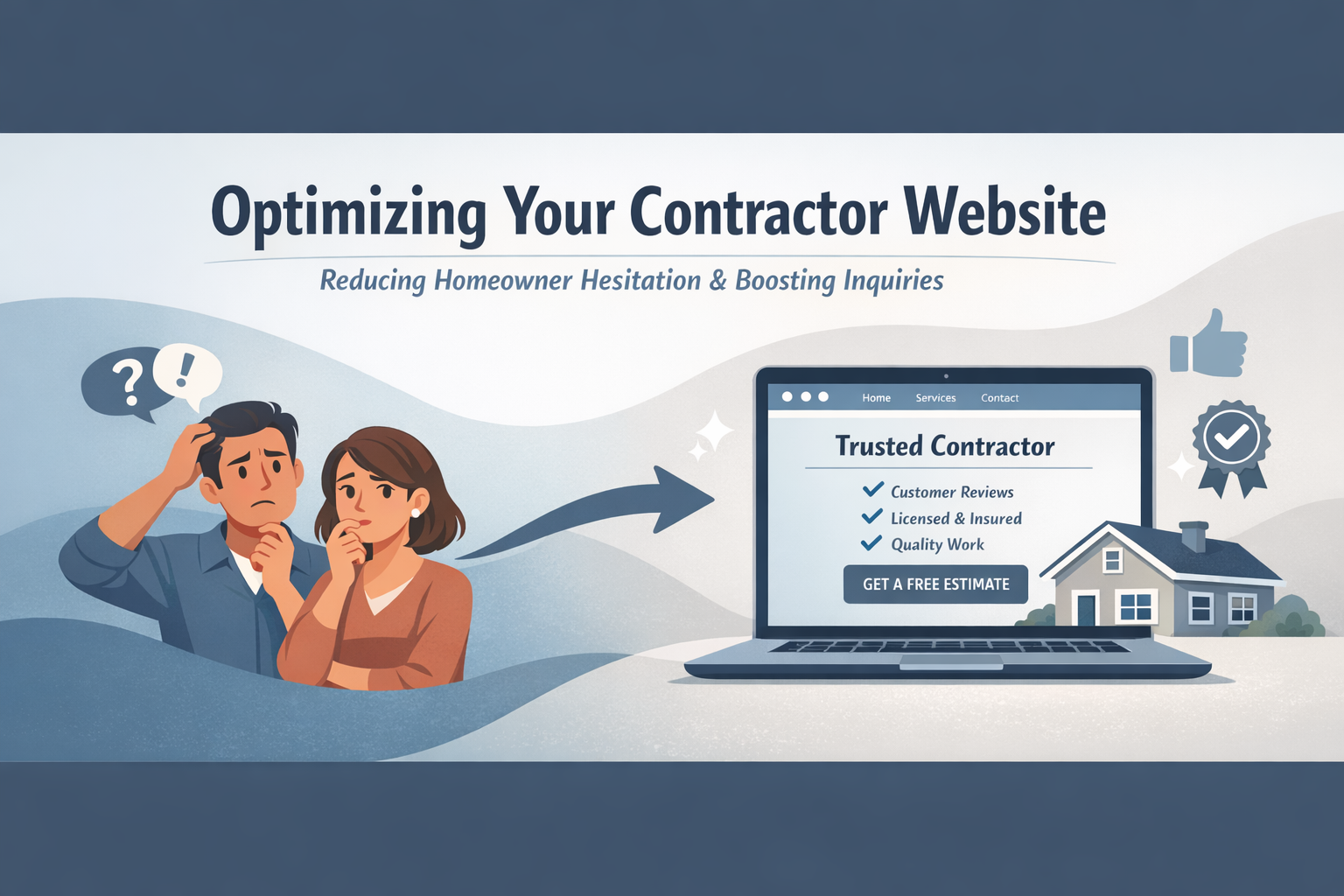
Homeowners hesitate due to uncertainty and mistrust when browsing contractor websites. A well-structured site can reduce this hesitation through clear navigation, trust signals, and straightforward calls to action, ultimately leading to more inquiries and booked jobs.
Introduction
In today’s digital world, your website serves as the front line between your contracting business and potential customers. Homeowners may find themselves hesitant to reach out for services if your site leaves them feeling confused or uncertain. By enhancing your site layout, you can not only reduce this hesitation but also generate more phone calls and bookings. In this blog post, we’ll dive into practical strategies contractors can implement to create a website that builds trust and encourages conversions.
Understanding Homeowner Hesitation
Before we tackle how to improve site layouts, it’s essential to understand why homeowners hesitate. Often, it comes down to:
- Uncertainty about the quality of your services
- Lack of information on pricing, service areas, or expertise
- Fear of poor customer service or hidden fees
Addressing these concerns through effective website design can help reassure potential clients and prompt them to take action.
Key Elements of a Trustworthy Website Layout
Clear Navigation
A clear and intuitive navigation structure is fundamental. Homeowners should be able to find what they need with minimal clicks. Here are some tips:
- Use a simple menu: Limit menu options to the most crucial sections, such as Services, About Us, Contact, and Testimonials.
- Add breadcrumbs: These help users backtrack easily and understand where they are within your site.
- Consider a search bar: If you have a lot of content, a search feature can make it easy for visitors to find specific information quickly.
Trust Signals
Incorporating trust signals into your website layout can significantly reduce hesitation. Here’s how to integrate them effectively:
- Testimonials and Reviews: Place these prominently on your homepage and service pages to showcase customer satisfaction.
- Certifications and Affiliations: If you’re part of reputable organizations, display their logos strategically on your site.
- Case Studies: Highlight successful projects with before-and-after images and detailed descriptions to illustrate your capabilities.
Effective Calls to Action (CTAs)
Each page of your website should have a clear call to action. Without it, visitors may leave without contacting you. Here are some effective strategies:
- Use direct language: Phrases like “Get a Free Estimate” or “Schedule Your Service Today” are straightforward and action-oriented.
- Place CTAs strategically: Position them where they make sense, such as after detailed services or customer testimonials.
- Make them stand out: Use contrasting colors and bold fonts to ensure your CTAs catch the eye.
Mobile Responsiveness
With more homeowners browsing services on their mobile devices, ensuring your website is mobile-friendly is non-negotiable. Key considerations include:
- Responsive design: Your website should adjust seamlessly to different screen sizes.
- Fast load times: A sluggish site can drive potential clients away before they even see your services.
- Easy-to-click buttons: Make buttons large enough for users to tap without difficulty.
An Ongoing Process
Website optimization shouldn’t be a one-time effort. Regular updates and maintenance are key to keeping your site efficient and trustworthy. Consider the following:
- Regularly update content: Whether it’s blog posts, project portfolios, or customer testimonials, fresh content keeps your site engaging.
- Conduct periodic audits: Examine your site’s performance, user flow, and updates in industry standards to ensure it remains effective.
- A/B testing: Experiment with various layouts, CTAs, and design elements to determine what works best for your audience.
Closing Thoughts
In summary, a well-structured website layout can significantly reduce homeowner hesitation and encourage more inquiries. By focusing on clear navigation, trust signals, effective calls to action, and mobile responsiveness, you’ll create a user-friendly experience that builds confidence in your contracting services. Remember, website optimization is an ongoing process. If you’re looking for guidance, consider a professional audit or cleanup to ensure your site performs at its best without feeling pressured.
In the end, a strategically designed website not only enhances your online presence but also translates to business growth. Start implementing these strategies today to reshape the way homeowners interact with your brand!