
Slate Summary
Understanding how to measure your website’s conversion rates can significantly impact your call volume and job bookings. In this post, we’ll explore practical steps to track conversions effectively, identify what works for your service business, and implement strategies that lead to improved results.
Introduction
In today’s digital landscape, having a website is just the starting point for service businesses like HVAC, plumbing, and restoration. The real challenge lies in ensuring that your website is not just visited, but also that it converts those visitors into actual customers. Knowing how to measure your website’s conversion rates is crucial for determining the effectiveness of your online presence and making informed decisions that lead to better business outcomes.
What is a Conversion Rate?
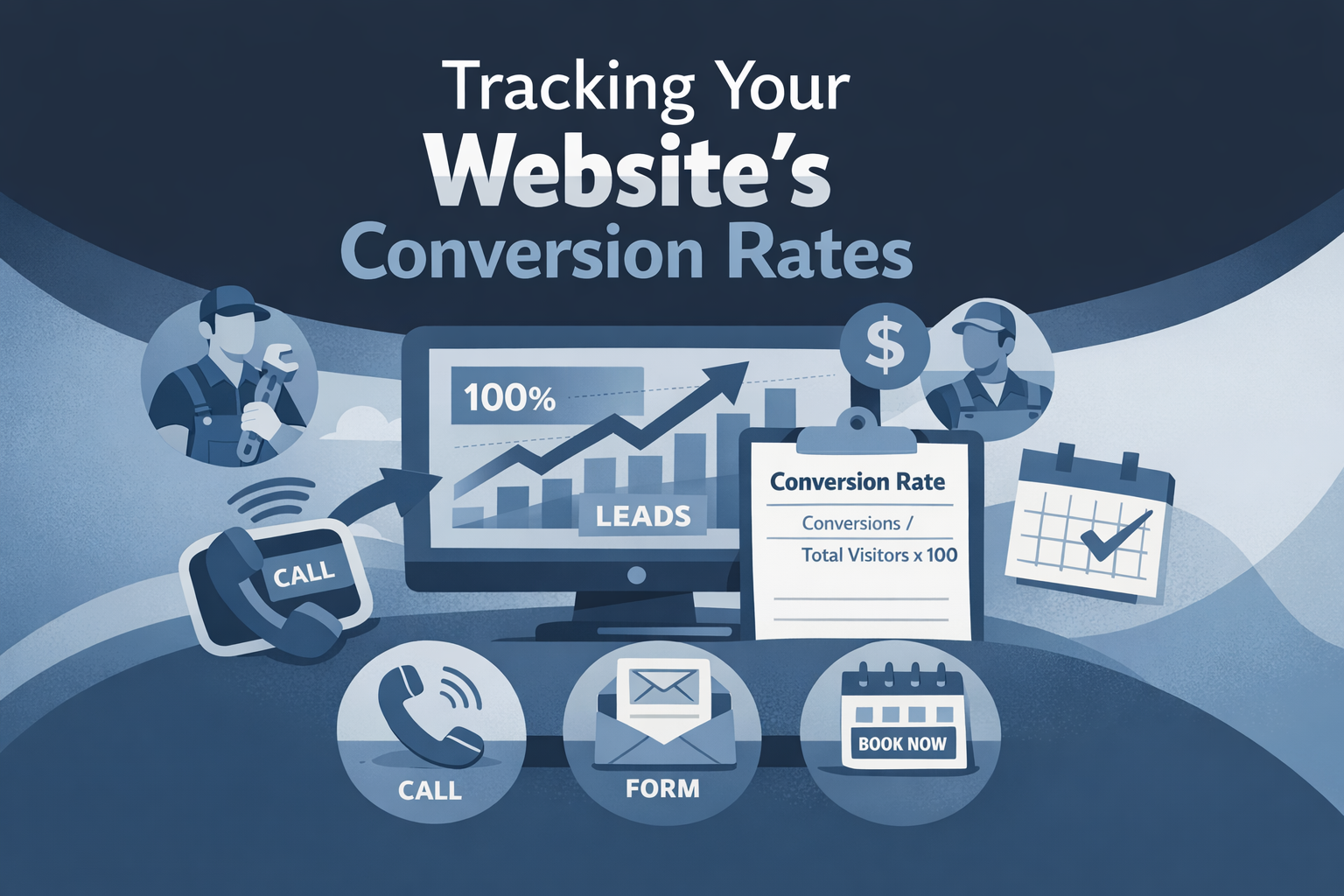
A conversion rate measures the percentage of website visitors who take a desired action, such as making a phone call, filling out a contact form, or booking a service. For service businesses, these actions directly correlate with generating leads and ultimately driving revenue. The formula for calculating the conversion rate is simple:
- Conversion Rate = (Number of Conversions / Total Visitors) x 100
Understanding Your Goals
Before diving into measuring your conversion rates, it’s important to have a clear understanding of your business goals. Consider what actions you want your website visitors to take:
- Call Now: Tracking phone calls initiated from your website.
- Contact Form Submission: Collecting leads via service inquiries.
- Booking System: Online appointment setting for services offered.
Define what a conversion means for your business, as this will shape how you measure success.
Tools for Measuring Conversions
There are several tools available that make tracking conversions easier. Consider the following options:
- Google Analytics: This free tool provides insights into visitor behavior and allows you to set up goals for tracking conversions.
- Call Tracking Software: Tools like CallRail or Grasshopper can track phone calls that originate from your website calls.
- Form Builders: Platforms like HubSpot or JotForm allow you to create forms and track submissions effectively.
Setting Up Tracking in Google Analytics
Here’s how to set up conversion tracking in Google Analytics:
- Step 1: Create a Google Analytics account and set it up on your website.
- Step 2: Define specific goals in the admin settings. Choose goal type based on your defined actions (make a call, submit a form, etc.).
- Step 3: Implement necessary tracking codes on your website. This might involve embedding scripts for tracking phone conversions or form submissions.
Interpreting Your Data
Once you have everything set up, it’s time to analyze the data:
- Look for Trends: Are there specific times of day or certain pages on your website that yield higher conversion rates?
- Test and Optimize: Use A/B testing to see which versions of a landing page or service description generate higher conversions.
- Monitor Bounce Rates: A high bounce rate might indicate that visitors are not finding what they came for, which can hinder conversions.
Continuous Improvement: The Key to Higher Conversions
While measuring conversions provides valuable insights, continuous optimization is the secret weapon of successful service businesses. Here are actionable steps to enrich your conversion strategy:
- Enhance Trust Signals: Integrate customer testimonials, certifications, and awards prominently on your site, reassuring potential clients about your reliability.
- User-Friendly Design: Ensure that your website is easy to navigate, and that calls to action (CTA) are clear and prominent.
- Mobile Optimization: With the rising number of mobile users, ensure that your website performs well on smartphones and tablets.
- Create Valuable Content: Share blog posts, videos, and infographics that educate your clients on your services and improve your trustworthiness.
Conclusion
Measuring your website’s conversion rates is not just about numbers; it’s about understanding your customers’ behaviors and preferences. Implement the strategies outlined in this post to track conversions effectively and use the insights you gain to drive continuous improvements.
Remember, website optimization is not a one-time task. It’s a commitment to regular assessments and enhancements. If you’re looking for a professional audit or cleaning of your website, consider reaching out to experts who can guide you through this process without any pressure. By appreciating the importance of conversions, you’ll be more equipped to turn your website into a powerful tool for business growth.